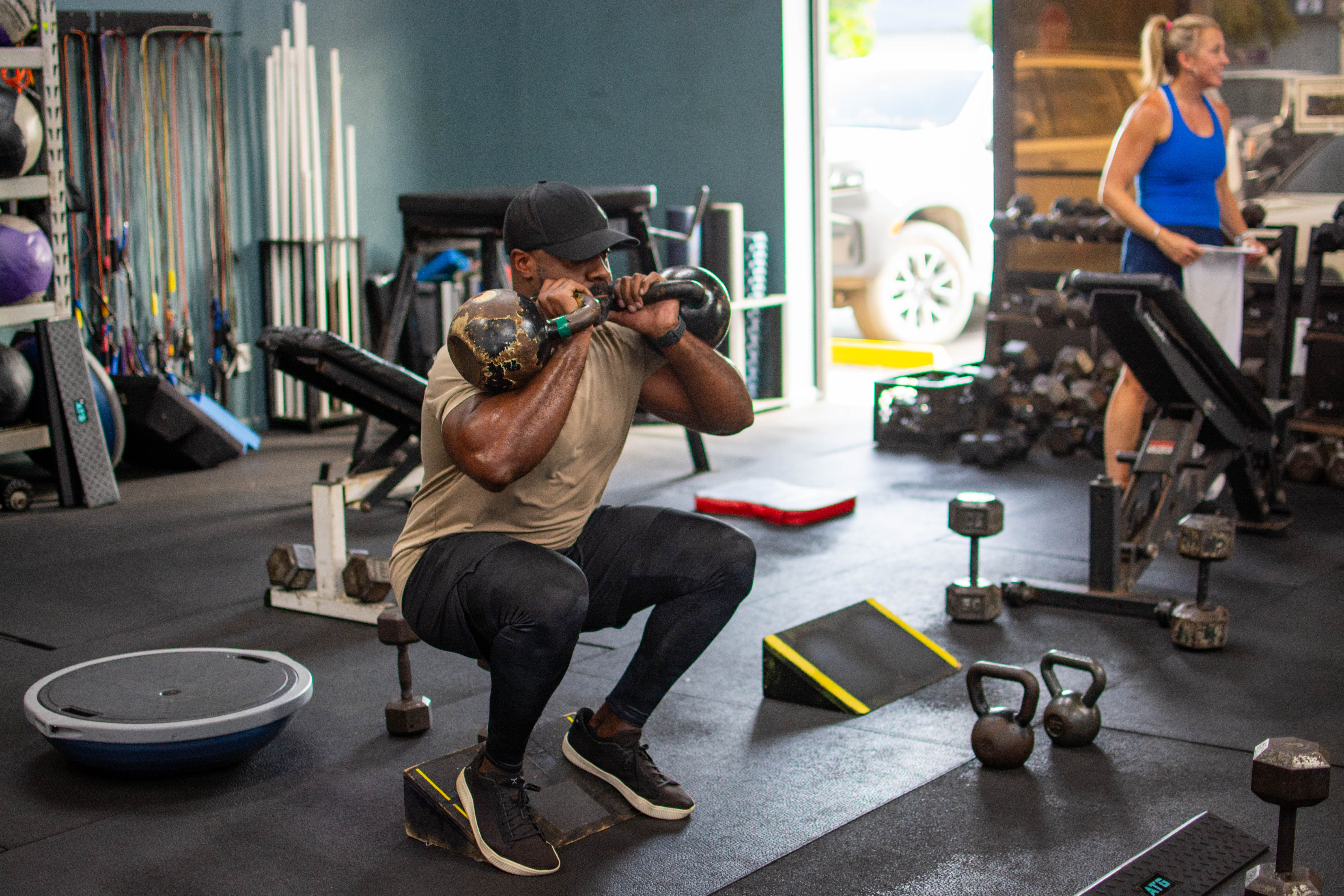
There’s the Warm-up…and Then, Warm-up Sets
Lifting is a skill. Warm-up sets allow you to treat it as such.
By
July 10, 2026
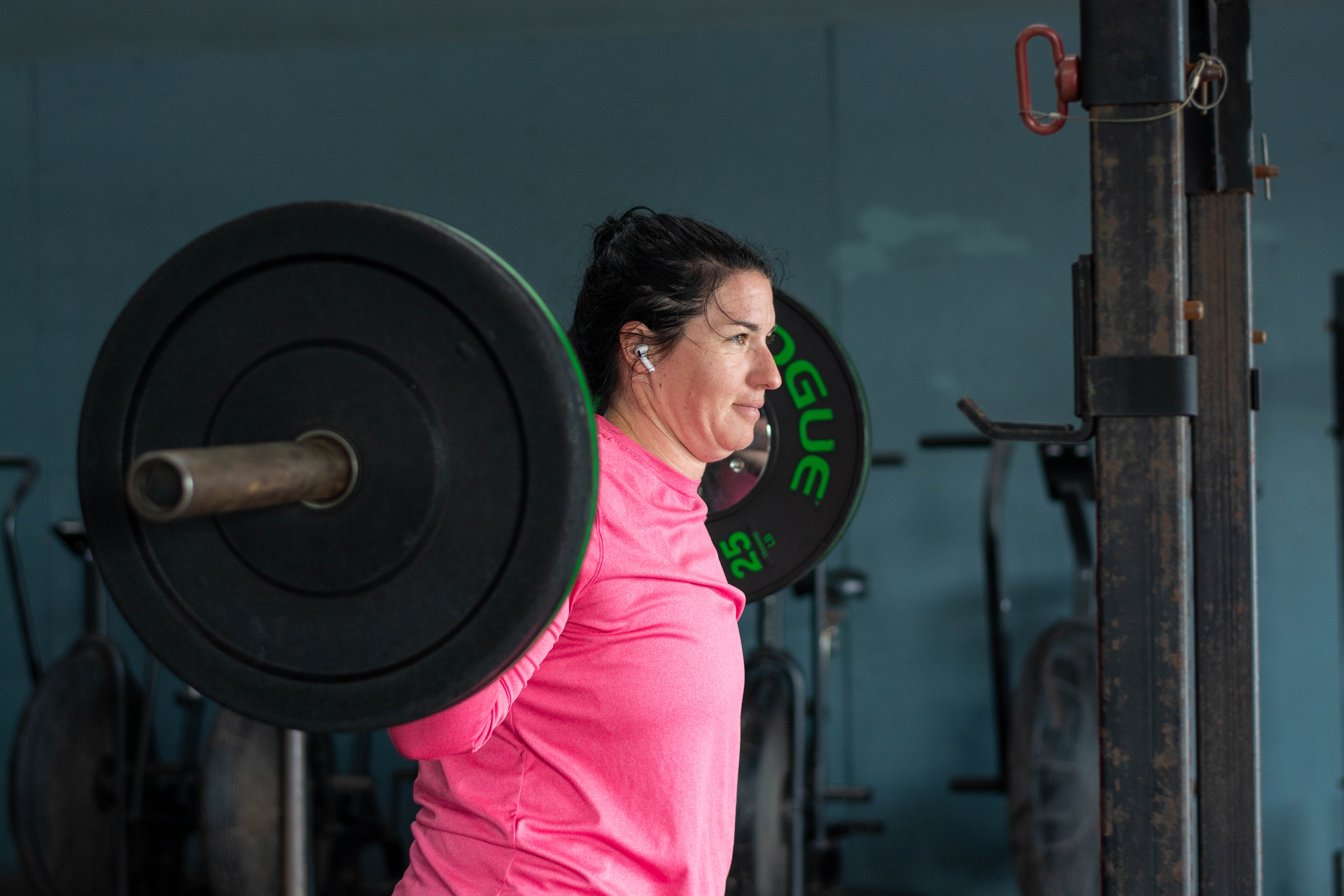

Walk into most commercial gyms and watch what happens before a big lift. Someone loads the bar, does a couple of arm circles, and jumps straight to their working weight. Maybe they'll do one "warm-up" set that's close to 70% of the top set, done fast or sloppily.
If you are skipping doing several warm-up sets, you are skipping the part of training that gets you ready for heavy loads and teaches your body how to do the lift correctly.
At our whiteboard briefing on strength days, we always give the reminder: take warm-up sets. The heavier you are going, the more warm-up sets you need.
After your priming warm-up, which includes movement prep/mobility, warm-up sets for each strength exercise are crucial. These are lighter sets that not only raise heart rate and get blood into the muscles but also support skill acquisition. Think of these as the dress rehearsal before the big show. Every lift, whether it's a squat, a deadlift, or a press, has a pattern: a bar path, a bracing sequence, a tempo, a setup. That pattern has to be rehearsed before you load it heavily. Your nervous system needs reps at lighter weights to reinforce proper technique.
Say, for instance, you plan on doing a squat at 225 for 5 reps. A real warm-up isn't one token set at 135. It's a ramp-up that looks something like this:
Each set has a job. The bar-only set is pure pattern practice. The 95 and 135 sets are where you notice whether your bracing is loose or your knees are caving in, while the cost of a mistake is still low. At these weights, you clean up your technique. The 185 set is your final rehearsal. By the time you hit 225, you've already run the pattern four times. You're either ready for the heavy set, or you realize that you need to adjust. And note: you should look exactly the same at 135 as you do at 225.
Compare that to someone who does bar only, then jumps to 185, then 225. They've had one light rehearsal and then they jump to a weight where a bad rep can turn into a bad week.
Doing a half-assed warm-up shows up in a few ways:
Technical breakdown under load. If you haven't practiced the pattern at lighter weights, your first heavy rep is where you find out your setup was off. Now you're troubleshooting with a bar that's hard to put down safely. Plus, it will feel heavier than it should. It's literally a shock to the system.
Missed lifts that shouldn't have been missed. A lot of "bad days" in the gym aren't really bad days. They're the result of walking into a top set cold, with a nervous system that hasn't been primed to fire in the right sequence.
Injury risk unrelated to the weight itself. Tissues and joints handle the load fine when the pattern is clean and your body is ready. But when you haven't done enough warm-up sets, not so much... One bad heavy set from a cold start can derail the whole session, whether that means bailing on a lift, tweaking something, or just losing confidence in the number you're supposed to hit.
A few rules of thumb:
Stop thinking of warm-up sets as the boring part before the real training starts. They are the real training. They're where you build the skill that your top set then gets to express. If you've ever seen the most elite lifters warm up, they start with an empty bar. So why are you slapping on heavy weight cold?
Nobody walks on stage and performs a routine they've never rehearsed. Don't walk up to a heavy bar and expect your body to nail a pattern it hasn't practiced that day.
Lifting is a skill. Warm-up sets allow you to treat it as such.